The Demand You Can't See
Product case studyA product-strategy analysis of how YouTube turns power-user workarounds into roadmap decisions.
The Signal a Dashboard Cannot Carry
A product can only measure what it lets you do. Every funnel and every retention curve is a record of permitted behaviour. The wants it blocks leave no trace. A feature you cannot reach is a click that never happens, and a click that never happens shows up nowhere.
So the sharpest signal of what to build next is the one analytics cannot show. It is the trouble people go to, on their own, to get around the product.
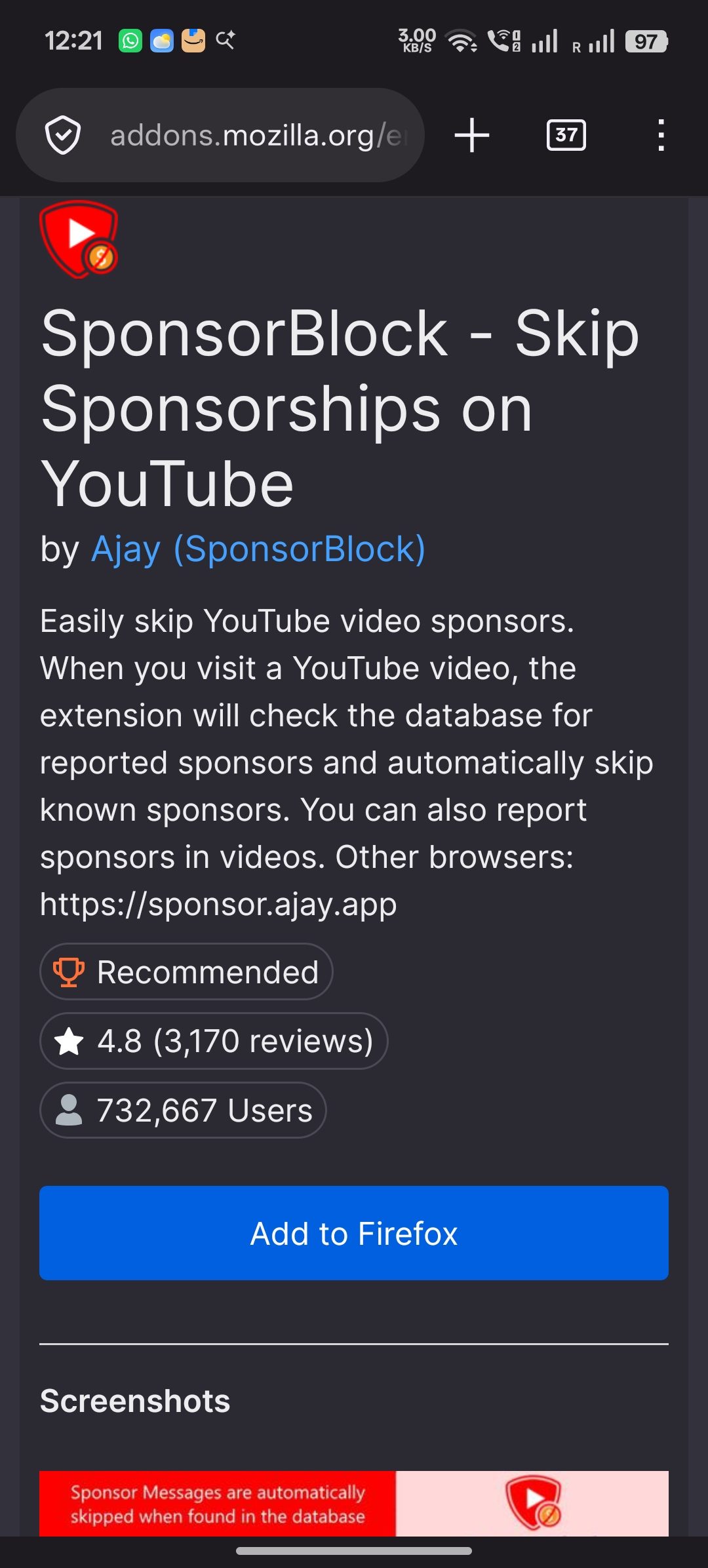
Two numbers open this study. SponsorBlock, which auto-jumps the paid promos inside videos, has 2,000,000 users on Chrome alone. Return YouTube Dislike, which estimates the counts YouTube deleted, has 5,000,000. Every one of those people installed software, trusted a stranger's code, and kept it updated. That is a real price, paid in effort and in security risk.
Nobody pays that price to solve a problem they do not have. The workarounds are a list of everything the product will not let you do, written by the people who wanted it most.
This case study does three things. It sizes that demand. It reconstructs the filter YouTube runs the demand through. Then it makes one prediction you can use to prove the reading wrong.
The Three Sides, With the Money Attached
YouTube looks like a product for viewers. It is really a marketplace holding apart three groups whose interests do not line up. In February 2026 Alphabet broke out its size for the first time. The split shows why the balance is not optional.
- Advertisers paid $40.4 billion in 2025, up about 12% on 2024's $36.1 billion. They buy attention next to content they are safe beside.
- Viewers paid roughly $20 billion in subscriptions. Together that took YouTube past $60 billion for the year. Music and Premium passed 125 million subscribers in March 2025, trials included.
- Creators were paid over $100 billion across the four years to 2025, on YouTube's own figure. That payout is what keeps the supply side in place.
Viewers want convenience. Creators want reach and income. Advertisers want return. YouTube works only while all three stay. Push too hard for one and the others leave. Without the paying two, the viewer's free lunch ends.
Now the catch. Every workaround optimises for exactly one of the three, the viewer, with no stake in the other two. A sponsor-skipper is a pure gift to viewers and a straight tax on creators. That asymmetry is why a win for power users is so often a loss for the platform.
Sizing the Demand No Dashboard Shows
Take the four biggest workarounds in turn. Each one carries a measured demand, a want underneath it, and a bill somebody has to pay.
- Sponsor-segment skippers — 2,000,000 Chrome users. The want is to reach the content without the filler. Granting it costs creators their sponsorship income.
- Background-play workarounds — no public count. They were common enough that Google closed them by hand. The want is to listen with the screen off. Granting it costs nobody.
- Shorts and feed removers — extensions and scripts, no single count. The want is to watch on purpose, not by pull. Granting it costs the platform 200 billion daily views.
- Dislike-count restorers — 5,000,000 Chrome users. The want is a quality signal before watching. Granting it costs creators, in pile-ons.
About 29.5% of internet users run an ad blocker at least sometimes, roughly 1.77 billion people, on GWI's Q2 2025 survey. That is a cross-industry figure, not a YouTube one. It still marks the outer edge of the same demand curve. Removing advertising is the largest want YouTube has. It is also the one it can never grant. That want sits directly on the $40.4 billion line.
The Filter Every Signal Runs Through
YouTube puts each of these through the same rough test. You can reconstruct it from the outcomes.
First question: is the want safe for the business? If it makes viewers happier at no cost to creators or advertisers, it is easy. YouTube builds it in, or more often puts it behind a paid tier. Convenience it can sell is convenience it is glad to provide.
Second question, if the want is not safe: can it be redesigned into something that is? Sometimes the desire underneath is legitimate but the hack's method is poison. Then the job is to serve the desire another way.
If neither holds, YouTube refuses, and keeps refusing, however loudly the workaround proves the demand.
Adopt and charge. Re-architect. Or refuse. Every move below is one of those three.
The Four Moves That Prove the Reading
Four decisions, one per branch, all of them public.
Sponsor-Skipping: Re-Architect
SponsorBlock lets viewers auto-jump the paid promos inside videos. It uses timestamps other users submit. Two million Chrome installs say the want is real. Granting it directly would strip creators of sponsorship money many of them live on.
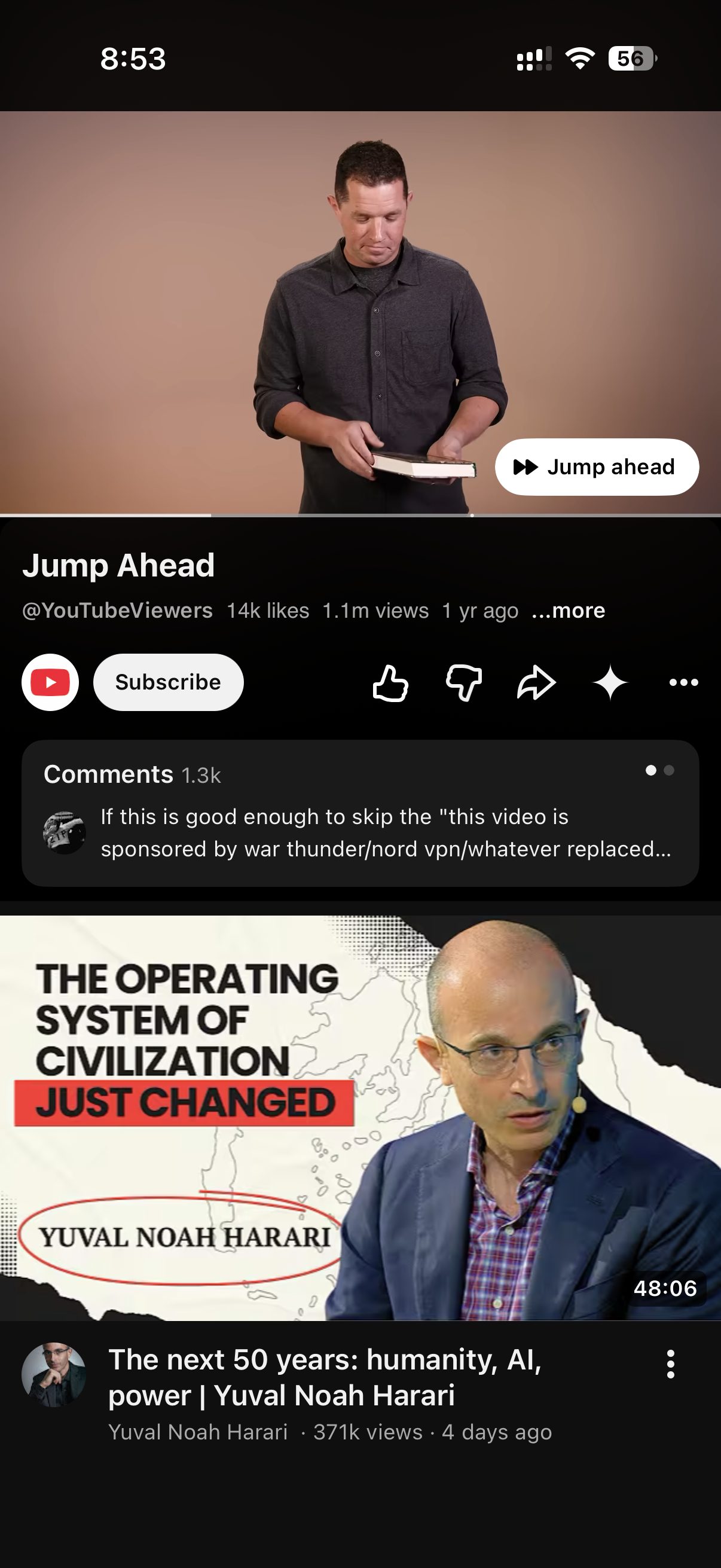
So YouTube did not. It read the desire underneath, which is that people want to reach the good part. Then it built something else to serve it. A “Most Replayed” graph on the seekbar shows where viewers keep returning. For Premium subscribers, a machine-learning “Jump ahead” skips to the next moment worth watching.
The pacing problem gets solved. The ad-read stays in the video. The desire honoured, the hack refused.
Background Play: Adopt and Charge
Listening with the screen off. Workarounds ran for years, from third-party browsers to patched apps. In late January 2026 Google confirmed it had closed the browser loopholes. Background playback, it told the press, is “intended to be exclusive for YouTube Premium members.” A month later it extended the feature down to the cheaper Premium Lite tier.
Here the want costs creators nothing and advertisers nothing. So YouTube charges for it. This is the branch where a workaround becomes a price. The closure is the clearest evidence the filter is running, because the loophole was patched deliberately, by hand.
One detail, because it is easy to get wrong. Background play and the faster playback speeds sit behind Premium. The swipe gestures power users also asked for, double-tap to seek and swipe for volume, shipped free. Same filter, opposite answer, and the difference is entirely the money.
Turning Shorts Off: Refuse, Then Concede Halfway
For a long time there was no real way to do it. Extensions and scripts that strip Shorts out of the interface signalled steady demand. These are people who want YouTube as a search-and-watch tool, not an endless feed.
YouTube resisted, and one number says why. Shorts averages over 200 billion views a day, announced at Cannes Lions in June 2025. The figure reported in March 2024 was 70 billion. That is close to a threefold rise in fifteen months. Shorts is the defence against TikTok, and a clean off-switch erodes the exact surface holding younger viewers in place.
Then in 2026 it changed, halfway. From April, YouTube let any user set a daily “Shorts feed limit” as low as zero minutes. At zero the scrolling feed is silenced, though Shorts still surface in search and on channel pages, and the setting is mobile-only.
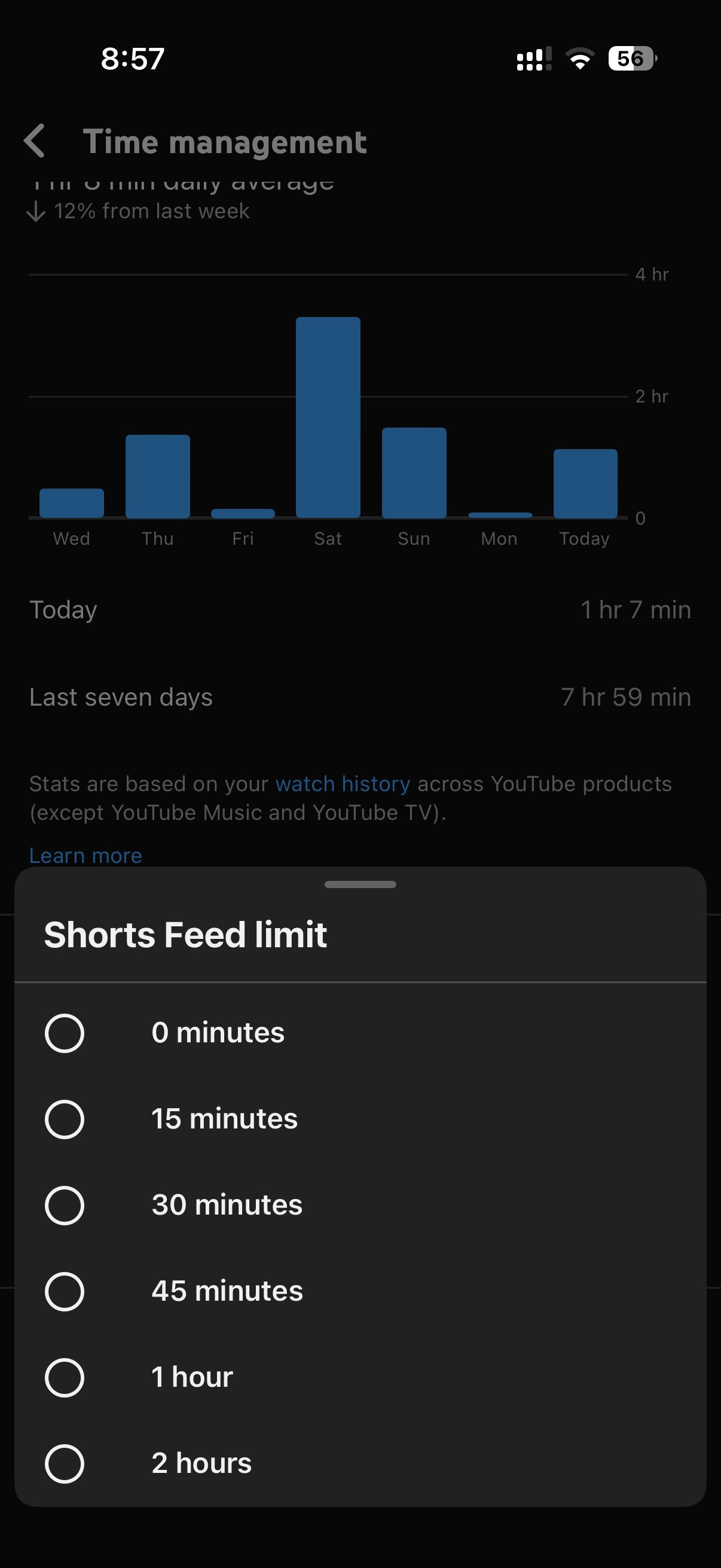
The fine print is the whole decision. On supervised teen accounts, set through Family Link, the limit locks. For everyone else it is dismissible. You hit zero minutes, a reminder appears, you wave it away and keep scrolling.
So viewers got the control they had been hacking for. YouTube kept the moat by making the adult version a nudge, not a wall.
Restoring Dislikes: Refuse
Public dislike counts were removed to shield smaller creators from coordinated dislike attacks. An extension appeared within weeks to estimate and restore them. Five million Chrome installs later, YouTube knows exactly how many people miss the signal.
The counts have not come back. The demand is legible and the answer is still no, because granting it reopens the harassment that hurts the creator side. This is the cleanest proof in the set that reading a signal is not the same as obeying it.
Why a Rounding Error Is Worth Reading
The objection is fair. Seven million Chrome installs against billions of viewers is a rounding error. Most viewers will never install anything. Why should their workarounds set any agenda?
Because effort is information. The average viewer tolerates friction in silence. You never learn what they would fix. The person who pays a real price to solve a problem is telling you the problem is worth solving. The mainstream frustration is usually the same one. It is only quieter.
But the same people over-index on the wants that would burn the platform down. They are the ones who want to strip sponsors, block ads, kill Shorts and restore dislikes. Treat that as a to-do list and you dismantle the two sides that pay for the free one.
So the signal splits in two. The workaround tells you what is broken. It does not tell you what to build. Sponsor-skipping revealed a pacing problem, and YouTube fixed the pacing, not the skipping. The hack is the diagnosis. The redesign is the job.
How You Would Know the Reading Is Right
A filter reconstructed from four decisions is a story until it predicts a fifth. So here is the call, with the test attached.
The prediction. YouTube will not ship a true off-switch for Shorts to its general users. It will keep refining the soft version, with finer limits, better Home-feed suppression, and settings that last longer. That version stays dismissible for any account that is not a supervised child's.
The leading indicators. Watch three things. Whether the zero-minute limit ever becomes non-dismissible for adults. Whether Shorts suppression persists across sessions rather than resetting. Whether YouTube reports Shorts daily views again, and whether the number is still climbing. The 200 billion figure is the moat, and a platform defending a moat does not hand out doors.
What proves me wrong. A persistent, non-dismissible “turn Shorts off for good” toggle for ordinary adult accounts, set by the viewer and not quietly reset. If that ships, the moat mattered less than I think, and this reading of the filter is wrong.
What This Does Not Answer
The filter explains the decisions. It does not price them. I can say a sponsor-skipper taxes creators. I cannot say by how much. YouTube does not publish sponsorship revenue and never will. It sits outside the platform, between the creator and the brand.
Nor do install counts measure intensity. Two million people installed SponsorBlock. I cannot tell you how many still run it, or how many would pay to keep it. A dashboard inside YouTube would answer both in an afternoon, and that is the version of this analysis I do not have.
What I do have is the shape of the demand, and the shape is enough to read the decisions.
Until the prediction resolves, the workarounds keep coming. They keep doing the same unpaid work. They show YouTube, for free, what its users wish it were. One problem the product will not let them solve, at a time.